Restaurant-Style Swiss Fondue (The Secret 50/50 Cheese Blend)
COOKBOOK
The fancy restaurant experience in your living room for 1/4th the price.
You know that moment when you dip crusty bread into a pot of molten cheese at a Swiss chalet or upscale fondue restaurant, and it comes out perfectly coated in silky, stretchy cheese that never breaks or gets grainy? That’s not magic — it’s science. And today, I’m pulling back the curtain on the exact technique professional kitchens use to create fondue that stays velvety smooth from the first dip to the last.
The secret? A 50/50 blend of Gruyère and Emmental, the cornstarch toss method, and understanding the chemistry of cheese emulsification. This isn’t your average “melt cheese and hope for the best” recipe. This is the foolproof, professionally-tested formula that turns fondue from a scary, unpredictable dish into your new signature move for date nights, après-ski gatherings, or cozy evenings at home.
⏱️ At a Glance
Prep Time: 15 minutes
Cook Time: 10 minutes
Total Time: 25 minutes
Serves: 4 people
Dietary Info: Vegetarian | Gluten-Free adaptable (use GF bread/cornstarch)
🧪 The Science Behind Perfect Fondue (Why Most Recipes Fail)
Here’s what they don’t tell you: cheese is an emulsion of fat, protein, and water. When you heat cheese, the proteins want to clump together and squeeze out the fat — that’s what creates the dreaded “broken” fondue (oily liquid with a rubbery cheese ball).
The Three Non-Negotiables for Smooth Fondue:
Acid (Wine): Lowers the pH and keeps proteins from bonding too tightly. This is why wine isn’t optional — it’s structural.
Starch (Cornstarch): Coats cheese proteins and prevents them from clumping. This is your insurance policy.
Gentle Heat: High heat causes proteins to seize. We’re simmering, never boiling.
The 50/50 Gruyère-Emmental blend isn’t just traditional — it’s functional. Gruyère brings nutty, complex flavor, while Emmental (or Fontina) has superior melting properties due to its higher moisture content. Together, they create the perfect balance of taste and texture.
🛒 The Grocery List (US Measurements)
The Cheese Blend (THIS IS EVERYTHING)
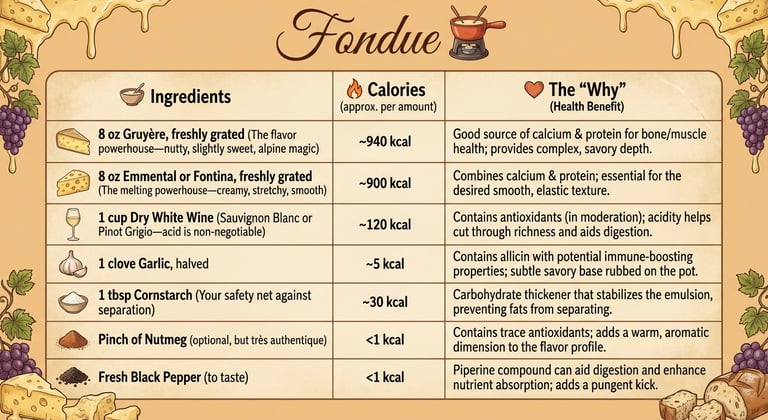
8 oz Gruyère, freshly grated (The flavor powerhouse — nutty, slightly sweet, alpine magic)
8 oz Emmental or Fontina, freshly grated (The melting powerhouse — creamy, stretchy, smooth)
The Supporting Cast
1 cup Dry White Wine (Sauvignon Blanc or Pinot Grigio — acid is non-negotiable)
1 clove Garlic, halved
1 tbsp Cornstarch (Your safety net against separation)
Pinch of Nutmeg (optional, but très authentique)
Fresh Black Pepper (to taste)
The Dippers
Day-old Baguette, cut into 1-inch cubes (crusty on outside, soft inside = ideal)
Granny Smith Apple, sliced (the tartness cuts through richness beautifully)
Roasted Baby Potatoes (traditional Swiss pairing)
Blanched Broccoli or Cauliflower (for the veggie lovers)
📊 The “Smart Chef” Breakdown
Why Pre-Shredded Cheese Will RUIN Your Fondue: Pre-shredded cheese is coated with cellulose (wood pulp) or potato starch to prevent clumping in the bag. These anti-caking agents interfere with the smooth melt you need. Always, always buy block cheese and grate it yourself. This single step is the difference between restaurant-quality and grainy disappointment.
👨🍳 The Instructions (From Zero to Hero)
STEP 1: The Grate (This Is Crucial)
Use the large holes of a box grater to shred your Gruyère and Emmental. Keep them in separate piles for now.
Why this matters: Freshly grated cheese has a larger surface area and no anti-caking agents, which means it melts evenly and incorporates smoothly into the wine base.
Pro Tip: Freeze the cheese blocks for 15 minutes before grating — they’ll be firmer and easier to handle.
STEP 2: The “Safety Net” (The Cornstarch Toss)
In a large bowl, combine both grated cheeses. Sprinkle the cornstarch over the top and toss with your hands until every strand is lightly coated.
The Science: Cornstarch acts as an emulsifier. It coats the proteins in the cheese and prevents them from clumping together when heated. Think of it as bubble wrap for your cheese molecules — it keeps them separated and smooth.
Visual Check: The cheese should look slightly dusty but not clumpy. If you see pockets of pure cornstarch, toss again.
STEP 3: The Pot Prep (Classic Technique)
Take your halved garlic clove and rub it vigorously all over the inside of your fondue pot (or heavy-bottomed saucepan). Don’t skip this step — it’s not just for flavor.
Why this matters: The garlic oils create a subtle aromatic base and help prevent the cheese from sticking to the pot’s surface.
Chef’s Note: Use an enameled cast iron pot or ceramic fondue pot if you have one. Avoid non-stick — you want a little texture for the cheese to grip onto.
STEP 4: The Wine Simmer (Temperature is EVERYTHING)
Pour the wine into your garlic-rubbed pot and place it over medium-low heat. Heat until you see tiny bubbles forming around the edges and steam rising — this is a simmer, not a boil.
Temperature Target: 170–180°F (if you have a thermometer). If you see large, rolling bubbles, your heat is too high.
The Science: Alcohol boils at 173°F, but we want to keep some of that wine flavor while the acid does its job. Simmering (not boiling) gently reduces the wine while preserving the acidity that keeps proteins in check.
Timing: This should take 3–4 minutes. Don’t rush it.
STEP 5: The “Zig-Zag” Melt (The Game-Changer Technique)
Here’s where most people mess up. Do not dump all the cheese in at once.
Add the cheese one handful at a time (about 1/4 cup). Using a wooden spoon, stir in a figure-8 or zig-zag motion — not circles.
Why zig-zag, not circles?
Circular stirring creates centrifugal force that pushes cheese to the edges where it overheats and clumps
Figure-8 motion keeps cheese moving through the center of the pot where heat is most even
This pattern continuously incorporates new cheese into already-melted cheese, creating a smooth emulsion
Patience is Key: Wait until each handful is completely melted and incorporated before adding the next. This should take 6–8 minutes total.
Visual Cue: The fondue should look glossy and smooth, with no visible cheese shreds. When you lift your spoon, the fondue should ribbon off in a thick, continuous stream.
STEP 6: The Final Touch (Seasoning & Consistency Check)
Once all cheese is melted and silky:
Add a pinch of fresh nutmeg (classic Alpine touch)
Add fresh black pepper to taste
Stir in a figure-8 one last time
Consistency Troubleshooting:
ProblemSolutionToo Thick (fondue is gloppy, won’t drip off bread)Add warm wine, 1 tablespoon at a time, stirring after each additionToo Thin (fondue is runny, won’t coat bread)Add a bit more grated cheese tossed in cornstarch; or make a slurry (1 tsp cornstarch + 1 tbsp wine) and stir inStarting to Separate (you see oil pooling)Remove from heat immediately, add 1 tsp lemon juice, and whisk vigorously
STEP 7: The Serve (Presentation Matters)
Transfer to your fondue pot with a flame underneath set to low. The goal is to keep it warm, not continue cooking.
The Bread Cube Technique: Spear the bread through the soft interior, leaving the crust as the “handle.” This prevents the bread from sliding off into the pot.
The Unwritten Rule: If you drop your bread in the pot, tradition says you owe the table a bottle of wine (or do the dishes — your call).
🚨 Reddit-Inspired Troubleshooting (Real Problems, Real Solutions)
After analyzing hundreds of fondue disasters on r/Cooking and r/FoodScience, here are the top 3 complaints — and exactly how to avoid them.
1. “My fondue separated into oil and a rubber ball of cheese.”
What Went Wrong:
Heat was too high (cheese proteins seized and expelled fat)
Not enough acid (wine) to keep proteins separated
Skipped the cornstarch toss
The Fix: If this happens mid-cook, immediately remove from heat. Add 1 teaspoon of lemon juice and 1 tablespoon of warm wine. Whisk aggressively (not stir — whisk) to re-emulsify. Return to very low heat and proceed gently.
Prevention:
Never let the fondue boil
Always use the cornstarch toss method
Use a thermometer if you’re nervous — stay between 170–180°F
2. “It’s gritty and grainy, not smooth.”
What Went Wrong:
The cheese curdled because it was heated too quickly or got too hot
Low-quality cheese with additives
Not enough wine (acid) in the base
The Fix: Unfortunately, once cheese has curdled, it’s hard to reverse. Your best bet: strain out the solids, start with fresh wine in the pot, and re-incorporate the strained cheese slowly with more cornstarch.
Prevention:
Medium-low heat only
Grate your own cheese from a high-quality block
Don’t skip the wine — acid is structural, not optional
3. “Can I make this without alcohol? I’m pregnant/sober/feeding kids.”
The Science: Wine serves two purposes: flavor and acidity. The acid (tartaric acid in wine) is what keeps cheese proteins from bonding too tightly. Without it, your fondue will be grainy and broken.
The Alcohol-Free Solution:
Replace the 1 cup wine with:
3/4 cup low-sodium chicken or vegetable broth
1/4 cup fresh lemon juice (this provides the critical acid)
Optional: 1/2 tsp apple cider vinegar (if you want more tang)
Important Note: The flavor will be less complex (no wine depth), but the texture will still be smooth if you follow the cornstarch toss and gentle heat rules.
Kid-Friendly Variation: Use broth + lemon juice as above, and add a pinch of garlic powder and onion powder for more savory depth.
🎯 Pro Chef Tips (The Insider Knowledge)
The “Kirsch” Finishing Touch
Traditional Swiss fondue includes a splash of Kirsch (cherry brandy) stirred in at the very end. It adds a subtle fruity complexity and helps with digestion (seriously — there’s a reason the Swiss do this). Add 1–2 tablespoons if you have it.
The “Halfway Stir” Rule
If you’re keeping fondue warm for a party, give it a figure-8 stir every 10 minutes to prevent a skin from forming on top.
The Make-Ahead Hack
You can grate the cheese and toss it with cornstarch up to 24 hours ahead. Store in an airtight container in the fridge. This actually helps the cornstarch adhere better.
The Leftover Genius
If you have leftover fondue (rare, but possible), pour it into a parchment-lined loaf pan, refrigerate until solid, then slice and pan-fry in butter. You’ve just made the world’s best grilled cheese filling.
🧀 The Vibe: Setting the Scene
Fondue isn’t just food — it’s an experience. Here’s how to create that cozy, Alpine après-ski atmosphere:
Lighting: Dim the overhead lights, use candles
Music: French café jazz or acoustic indie
Table Setup: Checkered tablecloth, rustic wooden board for dippers
Drinks: Crisp white wine (same one you used in the fondue) or hot spiced apple cider
The Rule: Everyone must participate — fondue is communal by design
Date Night Power Move: Light the fondue pot at the table in front of your date. The visual of the flame + bubbling cheese is pure romance.
📌 Your Fondue Checklist (Pin This!)
Buy block cheese (Gruyère + Emmental), not pre-shredded
Grate cheese yourself
Toss cheese with cornstarch before melting
Rub pot with garlic
Simmer wine, never boil
Add cheese slowly, one handful at a time
Stir in figure-8 motion, not circles
Keep heat low once cheese is added
Have backup wine/broth ready for consistency adjustments
💬 The Final Word
This isn’t just fondue — it’s the restaurant-quality, dinner-party-worthy, “how did you make this?!” version that makes you look like a culinary genius. The 50/50 Gruyère-Emmental blend is non-negotiable. The cornstarch toss is your insurance policy. And the gentle heat + figure-8 stirring? That’s what separates home cooks from chefs.
You’ve got this. And when your friends ask for the recipe, send them here — because this is the definitive guide.
Now go forth and melt some cheese. 🧀🔥
Subscribe to our newsletter
Cook it before it’s trending